Warning sign
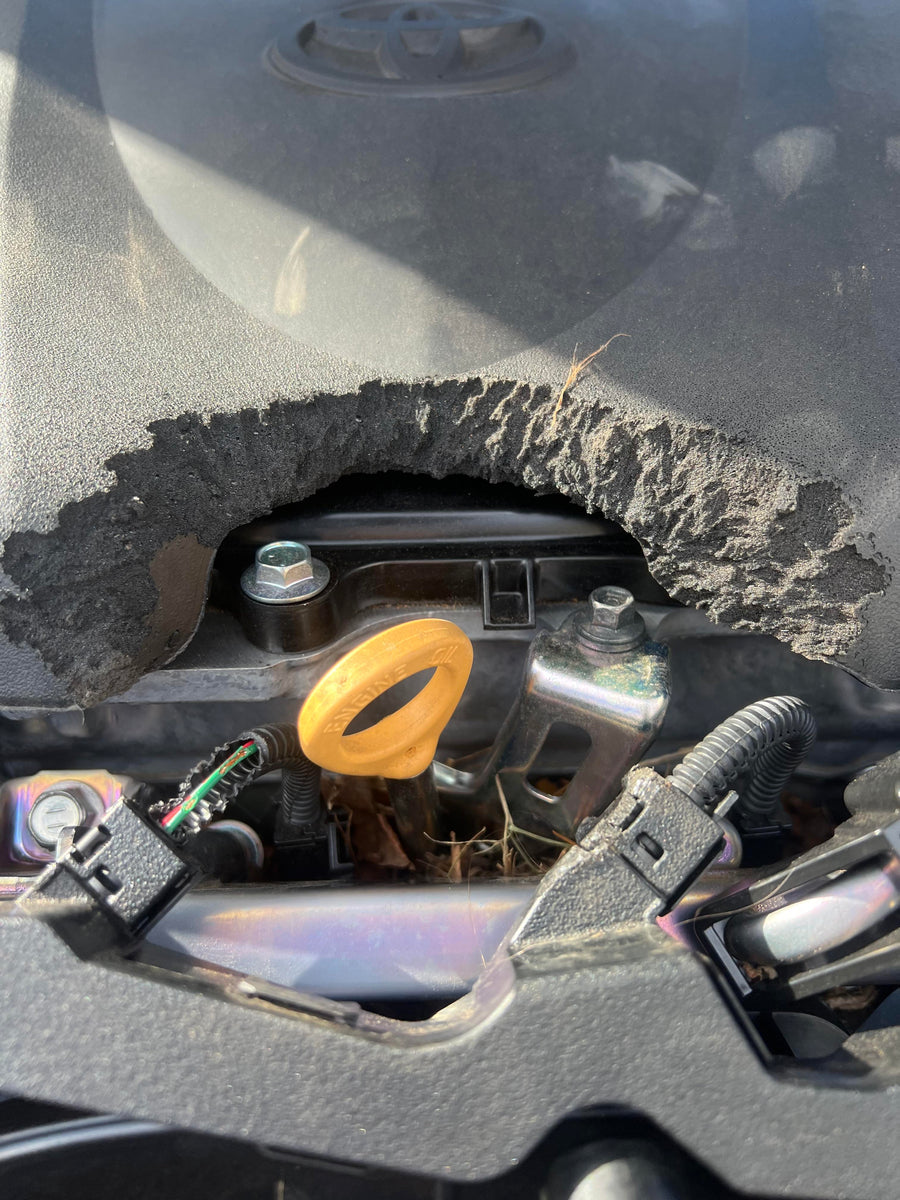
Nests under the engine cover
Insulation chewed away, with leaves and straw packed in around the engine and a chewed harness below.
Every fall, mice move into parked cars for warmth and shelter, then nest and chew through wiring. Here's how to keep them out, and what to do if they've already been at it.
Start with tape. Add a plate unit if they keep coming back, and a battery unit for vehicles in storage.


Chewed wiring can short, and the faults it causes come and go, which makes them slow and expensive to trace.
Insulation chewed away, with leaves and straw packed in around the engine and a chewed harness below.
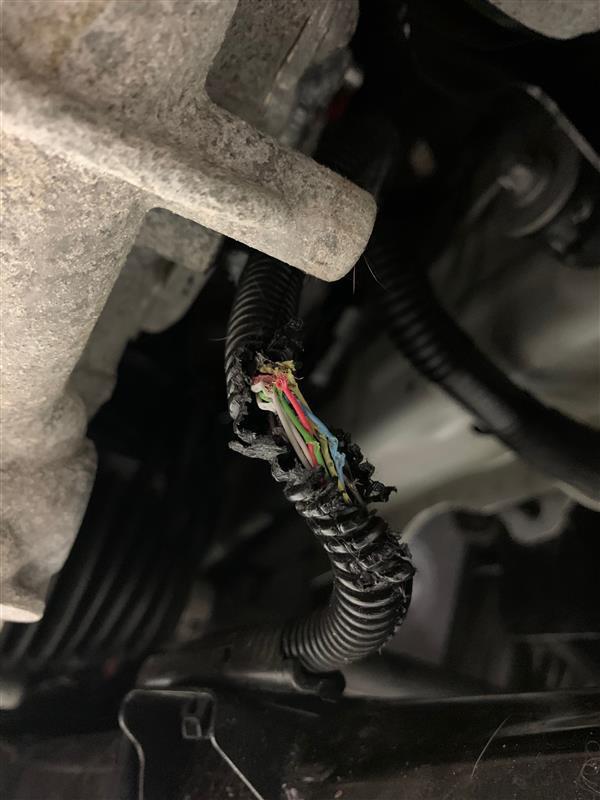
A harness chewed through its conduit. Damage like this can short and cause faults that come and go.
We repair rodent-damaged wiring at our Markham shop, and wrap the repair in capsaicin tape while it's apart to discourage a repeat visit.
A parked engine bay is warm, sheltered and full of nesting material, so mice move in when the weather turns cold. Once they're in, they chew to keep their teeth worn down, and wiring is within reach. Some newer vehicles use soy-based insulation, which many technicians believe makes it worse.
Yes. Honda made it well known as part 4019-2317, but it works on any vehicle, and on equipment like generators and lawn tractors. Wrap the harnesses, hoses and fuel lines rodents can reach, and wear gloves while you do it.
On their own, not for long. Rodents get used to a sound when nothing bad follows it. That's why we put shock plates first: touching a plate has a real consequence. A sound unit is worth adding as an extra layer, not relying on.
Yes, with care. Deer mice can carry hantavirus, so wear gloves, spray the droppings and nest material with disinfectant and let it soak, then wipe it up. Never sweep, vacuum or blow it out with compressed air. Our guide has the full steps.
Sometimes. Some comprehensive policies cover it and some exclude it, so check yours before the repair.
Send us a photo of the damage or the engine bay and we'll tell you what it needs.